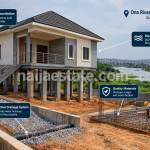
Real Estate Crowdfunding in Ibadan: Are Fractional Property Investments Worth the Risk?
Imagine having ₦200,000 available for investment in Ibadan property, but the land you have been eyeing costs several millions of naira. You are interested in property, but buying an entire house, funding a building project or acquiring a plot outright is currently beyond your budget.
Would you consider investing alongside other people to own a share of a property and potentially earn rental income?
That is the idea behind real estate crowdfunding and fractional property investment. Instead of purchasing an entire property alone, several investors contribute money towards a property or development and receive returns according to the investment arrangement.
For residents of Ibadan, Oyo State, this approach raises an important question: are real estate crowdfunding platforms safe, and can fractional property investments genuinely provide an alternative to traditional property ownership?
This real estate crowdfunding platforms Ibadan safety guide examines how the investment model works, the opportunities in Ibadan's property market, the risks investors should understand, the legal checks that matter, and how to evaluate a property investment before transferring your hard-earned money.
The objective is not to promise quick wealth. It is to help prospective investors understand what they may be buying, how they might earn returns, and what could go wrong.
What Is Real Estate Crowdfunding?
Real estate crowdfunding is a method of raising money from multiple investors to finance property-related projects. Depending on the arrangement, the funds may be used to acquire land, develop residential buildings, purchase rental properties or finance commercial real estate.
Investors contribute different amounts, and their financial rights depend on the legal structure of the investment.
For example, one arrangement may give investors shares in a company that owns an apartment building. Another may provide contractual rights to a portion of rental income or project profits. A property development fundraiser may instead offer a debt investment that promises repayment with interest under agreed conditions.
These arrangements are not identical, and the differences matter.
Fractional property investment generally means participating economically in a property without purchasing the entire asset. It may involve direct co-ownership, shares in a property-owning company or another contractual structure.
The important question is not simply how much money you need to enter. It is what legal rights you receive in exchange for that money.
How Does Fractional Property Investment Work?
Consider a hypothetical residential property project in Ibadan valued at ₦50 million.
A promoter proposes to raise the entire amount from 100 investors, each contributing ₦500,000.
The figures are straightforward:
Total project funding target: ₦50 million.
Number of investors: 100.
Contribution per investor: ₦500,000.
Illustrative contribution as a percentage of the funding target: 1%.
However, contributing 1% of the funding target does not automatically mean you legally own 1% of the land or building.
The actual ownership percentage depends on the company's share structure, the property's legal ownership, the investment agreement and any other relevant terms.
The investment could also be structured as a loan, in which case the investor is a creditor rather than a property co-owner.
Before investing, establish whether your contribution buys equity, direct ownership, a debt claim or another form of investment.
That distinction determines your rights to income, voting, asset sales and recovery if the project fails.
Why Is Real Estate Crowdfunding Attracting Attention in Nigeria?
Traditional property ownership can require substantial capital before a buyer can even begin to benefit from the asset.
In Ibadan, prospective buyers may have to budget for the land itself, legal fees, searches, surveys, documentation, development costs and other transaction expenses. Buying a completed property may also involve maintenance, insurance and property management.
Crowdfunding offers a different entry route by allowing several people to finance one project.
Recent Nigerian property-industry coverage has discussed fractional ownership as an emerging route for investors who cannot afford an entire property. Nevertheless, growing interest should not be confused with proof that every platform is reliable or that every investment will generate a profit.
The attraction of a smaller entry amount
An investor who cannot afford a whole rental property might be able to participate in a properly structured investment with a smaller contribution.
This can make property exposure more accessible, although the minimum amount varies by offering.
Smaller entry requirements do not eliminate risk. Losing a relatively small amount can still be financially significant, especially when the money represents personal savings.
Potential rental income
Some fractional investments involve existing rental properties.
If the property is occupied and tenants pay their rent, investors may receive distributions according to the investment agreement.
However, rental income is not automatically guaranteed. Vacancies, unpaid rent, maintenance, insurance, taxes, management charges and other expenses can reduce the money available for distribution.
Potential capital appreciation
Property values may rise over time, allowing an owner to sell at a profit.
But appreciation is neither automatic nor uniform across Ibadan. A property in a well-connected neighbourhood may perform differently from one in an area where infrastructure, access roads or demand develop more slowly than expected.
An investor should never assume that a developer's projected resale price is the same as the price a buyer will eventually pay.
Why Ibadan Could Be Relevant to Fractional Property Investment
Ibadan is an important urban centre in southwestern Nigeria, with residential neighbourhoods, educational institutions, commercial districts and developing areas that attract different categories of property seekers.
Its property market includes established locations such as Old Bodija and Iyaganku GRA, as well as other residential and developing corridors. Each location has its own demand patterns, infrastructure conditions, access considerations and property characteristics.
Fractional investment could provide exposure to selected Ibadan properties without requiring each investor to buy an entire building.
Nevertheless, the investment case must be assessed at the individual property level. A broad statement that Ibadan is growing does not establish that a particular development will be profitable.
Established neighbourhoods and rental demand
Established residential districts may attract professionals, families, business owners and other tenants who value accessibility and existing infrastructure.
For a closer look at two established neighbourhoods, read NaijaEstate's analysis, Iyaganku GRA vs Old Bodija: Which Ibadan Luxury Neighbourhood Wins in 2026? .
The useful lesson for a potential fractional investor is that location comparisons should go beyond prestige. Compare actual rents, purchase prices, vacancy periods, maintenance expenses and the likely tenant profile.
A premium address does not necessarily produce the best net rental yield if the acquisition price is too high.
Developing areas and infrastructure expectations
Some investors prefer developing locations because they expect infrastructure improvements and population growth to increase property values.
That expectation requires careful examination.
A proposed road, commercial development or public infrastructure project may influence demand, but an announced project is not the same as a completed one. Delays, funding problems, access restrictions and changes in development patterns can affect expected returns.
Before investing in land or a development project, establish what infrastructure already exists, what has been formally approved and what remains speculative.
For readers considering land along a major developing corridor, NaijaEstate also examines the issue in Land Banking Along the Ibadan Circular Road, Moniya: When Will Your Investment Mature? .
Land banking and fractional property investment are not necessarily the same thing. However, both require investors to understand how long their money may remain tied up and what evidence supports the expected increase in value.
Real Estate Crowdfunding Platforms Ibadan Safety Guide: Seven Checks Before Investing
A convincing website, professional photographs and an attractive investment dashboard cannot establish that a property is legally sound.
The following checks provide a practical starting point for evaluating a platform and its property offering.
1. Verify the company's identity
Begin by identifying the legal entity responsible for the investment.
Request its full registered name, incorporation details, registered address and the names of its directors or responsible officers.
Where appropriate, verify its corporate records through the Corporate Affairs Commission (CAC).
A registered company is not automatically a safe investment. Incorporation confirms a company's registration status; it does not guarantee that its property is genuine, its projections are realistic or its debts will be repaid.
Also establish which entity actually owns the property. The company advertising the investment may not be the same company named on the property's title documents.
If several companies are involved, ask how their responsibilities and liabilities are divided.
2. Check the relevant regulatory status
Nigeria's Securities and Exchange Commission (SEC) has a regulatory framework for investment-based crowdfunding.
Its official resources explain the rules for crowdfunding intermediaries and the registration requirements that apply to relevant operators.
Start with the SEC's official crowdfunding rules and regulatory resources and its crowdfunding intermediary registration requirements .
Determine whether the platform and the particular investment fall within a regulated activity. Verify the relevant registration directly with the regulator rather than relying only on a certificate or screenshot supplied by the promoter.
The legal classification matters because a platform that facilitates the offer of investment securities may have different regulatory obligations from an estate agency that merely advertises properties.
A platform's claim that it is a technology company does not, by itself, settle the regulatory question.
Equally, do not assume that every property-related website must have the same licence. The applicable requirements depend on what the company actually does and the structure of the offering.
3. Inspect the property title
This is particularly important when the investment involves land acquisition or property development.
Request the available title documents and have an independent Nigerian property lawyer review them.
Depending on the property and the circumstances, relevant documents may include:
A Certificate of Occupancy, where applicable.
A registered deed of assignment.
A survey plan.
Evidence of the root of title and the seller's authority to transfer the interest.
Relevant government consent or registration documents.
Information about mortgages, restrictions, litigation or competing claims.
The exact documents required depend on the property's tenure and transaction history.
A Certificate of Occupancy should not be treated as a magic paper that resolves every possible title problem. Its existence does not remove the need to examine the property's history, boundaries, encumbrances and the legal interest being offered.
For property in Ibadan, arrange appropriate searches through the relevant Oyo State land administration and registry channels, with professional guidance.
Do not rely solely on the promoter's lawyer if that lawyer represents the promoter rather than you.
4. Understand the ownership structure
Ask the platform a direct question: What exactly will I legally own after paying?
Request the investment agreement and identify whether you will receive:
Registered co-ownership of the property.
Shares in a company that owns the property.
A debt instrument or contractual repayment claim.
A right to receive a portion of rental income.
Another form of economic participation without direct property ownership.
Each arrangement creates different rights.
If you own shares in a company, for example, you do not necessarily hold a registered individual interest in the underlying land. Your rights may depend on the company's articles, shareholder agreement and other contractual documents.
If the promoter says investors jointly own a property, ask how those interests are recorded, who holds the title, how decisions are made and what happens if one investor wants to exit.
Verbal assurances are not an adequate substitute for written, legally enforceable terms.
5. Review how investor funds are handled
Find out where contributions are held, who can authorise withdrawals and what happens if the funding target is not reached.
Ask whether the funds are held through an appropriate custodian or segregated account where required, or whether they go directly into the operating company's account.
The answer should be consistent with the platform's legal structure and regulatory obligations.
Also establish whether money can be spent on another project, used for operating expenses or transferred to a developer before the relevant conditions have been satisfied.
An investor should know who controls the funds and what safeguards exist before sending money.
6. Examine the exit arrangements
A common misunderstanding is that a digital investment can be sold as easily as a listed share.
That is not necessarily true.
A platform may display an investment balance on its dashboard without providing a ready buyer who will purchase the investment at that value.
Ask whether there is a genuine secondary market, whether transfers require approval, whether the investment has a fixed maturity date and what fees apply to an exit.
If the agreement says investors cannot withdraw for three years, treat that as a real restriction rather than assuming an exception will be made when you need money.
7. Ask who bears responsibility when things go wrong
A sound investment agreement should explain what happens if construction is delayed, rental income falls, a tenant defaults, a developer becomes insolvent or the property cannot be sold at the expected price.
It should identify decision-making powers, reporting obligations, dispute-resolution procedures and the consequences of default.
If the platform cannot explain these issues clearly, pause before committing funds.
How to Calculate Potential Returns Without Being Misled
Investment advertisements sometimes highlight the amount an investor could earn while giving less attention to expenses.
To evaluate a property properly, distinguish between gross income, net operating income, cash distributions and the total return on your investment.
Consider this illustrative example.
Suppose a property is purchased for ₦50 million and generates ₦5 million in annual rent before expenses.
The gross rental yield is:
₦5 million ÷ ₦50 million × 100 = 10%.
That figure looks straightforward, but it is not the investor's final return.
Suppose annual operating expenses total ₦1.5 million. The property's net operating income before financing costs and any applicable taxes is ₦3.5 million.
The illustrative net operating yield is:
₦3.5 million ÷ ₦50 million × 100 = 7%.
Now assume an investor contributes ₦500,000 towards the project.
If the investor's legal economic interest is genuinely 1%, and if the property generates the assumed income and all distributions follow that ownership structure, the investor's proportional share of the ₦3.5 million net operating income would be ₦35,000 annually before any additional investor-level fees, taxes or other deductions.
That is an illustration, not a forecast or a promise of payment.
The actual distribution could be lower or zero. A reserve fund, management fee, debt repayment, vacancy or another contractual arrangement may affect the amount received.
A simple comparison
| Item | Illustrative amount |
|---|---|
| Property acquisition value | ₦50,000,000 |
| Annual gross rent | ₦5,000,000 |
| Annual operating expenses | ₦1,500,000 |
| Net operating income | ₦3,500,000 |
| Gross rental yield | 10% |
| Net operating yield | 7% |
| Illustrative 1% share of net operating income | ₦35,000 per year |
This example excludes acquisition costs, financing costs, investor-level charges and taxes. It also assumes that the investor is legally entitled to the stated proportion of net operating income.
The lesson is simple: calculate the return after expenses, and confirm that the agreement entitles you to receive it.
What about advertised annual returns?
Suppose a platform advertises an annual return of 15%.
Do not immediately compare that number with the 7% net operating yield in the example above. The figures may measure different things.
The advertised return might include projected capital appreciation, represent a target rather than a guarantee, or refer to a debt investment with different risks.
Ask the platform to explain:
Whether the return is guaranteed, contractual or merely projected.
Whether it includes rental income, capital appreciation or both.
Whether expenses and taxes have been deducted.
When payments are expected to begin.
Whether principal repayment depends on selling the property.
What happens if the project underperforms.
If the company cannot explain the calculation in plain English, do not let the headline percentage make the decision for you.
The Major Risks of Fractional Property Investment in Ibadan
Fractional property investment can make participation easier, but it does not remove the underlying risks of real estate.
Property title disputes
A project may be delayed or become difficult to sell if ownership is disputed or the seller lacked the necessary authority.
Investors may have limited control over resolving a dispute, especially if they own shares in a company rather than a registered interest in the land.
Independent legal due diligence should happen before funds are committed, not after a problem emerges.
Developer and construction risk
Off-plan projects can experience cost overruns, contractor disputes, approval delays and changes in market conditions.
A building that was expected to be completed in 18 months may take longer. During the delay, projected rental income may not materialise, while the investor's capital remains committed.
NaijaEstate's guide, Protecting Your Off-Plan Investment in Ibadan: Essential Guarantees Developers Must Provide , offers a useful starting point for understanding developer protections and contractual safeguards.
Before investing, review completion obligations, progress reporting, contingency arrangements and the remedies available if the developer fails to meet agreed milestones.
Low liquidity
Property is not automatically easy to sell.
Even if an investment performs well on paper, an investor may struggle to recover the money quickly.
If you need your contribution for school fees, medical expenses, rent or an urgent family obligation, a multi-year property investment may be unsuitable.
Do not commit money that you may need in the short term.
Rental and occupancy risk
A property may remain vacant for several months, or tenants may fail to pay on time.
Management expenses may also increase.
Before accepting a rental-income projection, request evidence supporting the proposed rent, expected occupancy, management costs and maintenance allowance.
Where the property is already occupied, review the tenancy arrangements and available rental records.
Fraud and misleading marketing
An attractive website does not establish that a property exists, that the promoter controls it or that the stated returns are achievable.
Be cautious when you encounter:
Guaranteed high returns with no meaningful risk disclosure.
Urgent demands to transfer money immediately.
Payments to unrelated personal accounts without a credible explanation.
Missing investment agreements.
Unverifiable property documents.
Unexplained changes in the company receiving investor funds.
Claims that a regulatory registration guarantees investment safety.
A genuine investment can still lose money. The objective of due diligence is to understand and manage risk, not to eliminate every possible loss.
Currency and inflation risk
An investment may produce a positive naira return while purchasing power changes over the holding period.
If a platform advertises returns in US dollars but owns a naira-denominated property, ask how the dollar return is calculated and who bears exchange-rate risk.
A projected dollar value is not the same as a legally enforceable dollar payment.
Management and governance risk
Investors in a fractional arrangement may not have direct control over tenant selection, repairs, refinancing or the sale of the property.
A promoter with broad decision-making authority can materially affect the investment outcome.
Review the voting rights, reporting arrangements, conflicts-of-interest policy and process for removing an underperforming manager.
Are Real Estate Crowdfunding Platforms Safe in Nigeria?
The honest answer is that safety depends on the platform, the investment structure, the underlying property and the legal protections available to investors.
There is no single platform-wide label that can replace an assessment of a specific offering.
Nigeria's SEC published its crowdfunding framework in January 2021 and subsequently issued guidance on registration and compliance. Its official materials explain that relevant crowdfunding operators must meet applicable requirements.
Investors should consult the regulator's current rules and verify the status of the particular operator and offering.
It is also important to distinguish regulatory compliance from commercial success. Regulatory registration, where required, does not mean that the regulator guarantees repayment, approves every commercial projection or protects investors from every possible loss.
For an Ibadan property investment, a useful review should combine regulatory checks with local property due diligence.
That means examining the legal entity, the ownership structure, the property's title, the development's feasibility, the financial assumptions and the exit arrangements.
A platform may be professionally managed and still offer an unattractive investment. Conversely, a smaller property project should not be judged solely by the size of its website or advertising budget.
Evidence matters more than presentation.
What Should You Know About Social Media Claims and Investment Testimonials?
Property investments are frequently discussed through social media posts, promotional videos, online communities and personal recommendations.
These channels can help investors discover opportunities, but they are not substitutes for independent verification.
A screenshot showing a successful withdrawal does not establish that all investors can withdraw. A testimonial about rental income does not prove that the income will continue. A photograph of a completed building does not establish that the investment being advertised owns it.
Treat promotional claims as questions to investigate.
If someone claims that an investment produces a particular monthly return, ask for the assumptions and supporting records. If an influencer promotes a project, establish whether the promotion is paid and whether the person has a financial interest.
Do not assume that repeated positive comments represent independent experiences. Several accounts may be repeating the same original claim.
Likewise, the absence of complaints online does not establish that a platform is safe.
The sensible approach is to use online information to identify questions, then seek documentary evidence from reliable sources.
An Illustrative Ibadan Investment Scenario: What Could Go Wrong?
Consider a hypothetical investor who contributes ₦300,000 to a fractional investment linked to a residential development in Ibadan.
The promoter says the development will be completed within a year and that rental income will begin shortly afterwards.
The investor receives a dashboard showing the contribution and a projected return. However, the agreement does not clearly identify the company that owns the land, the legal nature of the investor's interest or the conditions for withdrawing funds.
Construction is subsequently delayed.
Because the investor did not establish the legal ownership structure or review the exit provisions, it becomes difficult to determine what rights can be enforced, who is responsible for the delay and how the contribution can be recovered.
This is an illustrative scenario, not a report of an actual investor or verified Ibadan property dispute.
Its purpose is to demonstrate why a polished investment dashboard cannot replace legal documentation.
Now consider a better-prepared investor evaluating a similar project.
Before contributing, this investor:
Obtains the investment agreement.
Instructs an independent lawyer to examine the relevant title and transaction documents.
Verifies the promoter's legal identity and applicable regulatory status.
Reviews the construction budget and completion arrangements.
Checks how rental income will be calculated and distributed.
Establishes what happens if the project is delayed or the investor wants to exit.
Commits only money that can remain invested for the stated period.
These steps do not guarantee a profit. They improve the investor's understanding of the risks and provide a stronger basis for deciding whether the opportunity is appropriate.
Real Estate Crowdfunding Versus Buying Land in Ibadan
Which option is better: buying land directly or participating in a fractional investment?
Neither is universally superior. The appropriate choice depends on your financial circumstances, objectives, risk tolerance and willingness to manage the asset.
| Factor | Fractional property investment | Direct land purchase |
|---|---|---|
| Initial capital | May be lower, depending on the offering | Usually requires funding the full purchase and associated costs |
| Legal rights | Depend on the investment structure | Depend on the specific land interest acquired and documented |
| Control | Often shared or delegated | Generally greater control over the interest acquired, subject to applicable law and restrictions |
| Income | May provide a contractual share of rental income or investment proceeds | Vacant land generally produces no rental income unless put to an income-generating use |
| Management | Often handled by a platform or property manager | Buyer arranges management, development and other responsibilities |
| Liquidity | May be restricted by transfer or exit rules | Resale depends on title, market demand, pricing and transaction time |
| Diversification | May allow participation in different projects with smaller amounts | Multiple purchases can require substantial additional capital |
| Main concerns | Platform, governance, project and liquidity risks | Title, boundary, encumbrance, location and holding-cost risks |
Buying land directly gives you a different set of responsibilities. You must investigate the title, confirm boundaries, understand applicable planning restrictions and consider whether the location meets your objectives.
Crowdfunding may reduce the administrative burden of direct ownership, but it introduces dependence on the platform, the legal vehicle and the people managing the asset.
Neither option should be selected simply because a promoter describes it as safer.
How to Choose a Property Investment Based on Your Budget
A common mistake is to start with the amount of money a platform will accept instead of the amount you can responsibly commit.
Begin by separating your finances into essential living expenses, emergency savings, near-term obligations and money available for long-term investment.
Then consider the following questions.
Can you afford to lose the contribution?
Property investments carry risks. Do not use money required for food, accommodation, education, healthcare or other essential expenses.
How long can the money remain invested?
If your objective is to access the funds within six months, an investment with a three-year holding period may not suit you.
Do you understand the investment structure?
If you cannot explain in simple terms what you own, how returns are generated and how you can exit, obtain clarification before proceeding.
Are you comfortable with the worst-case scenario?
Consider the possibility of delayed construction, lower rental income, unexpected expenses or a difficult sale.
Have you compared alternatives?
A fractional investment is only one possible route into property-related investments. You may also compare direct property ownership, properly regulated collective investment products and other options appropriate to your circumstances.
The comparison should consider costs, liquidity, legal rights, risk and time horizon, not just the advertised return.
A Practical Due-Diligence Checklist Before Sending Money
Use this checklist when evaluating a property crowdfunding opportunity connected to Ibadan.
I have verified the legal identity of the company receiving the investment.
I understand which regulator, if any, oversees the platform and offering.
I have checked the applicable registration status directly with the regulator.
I have received and reviewed the full investment agreement.
I know whether my contribution buys shares, direct ownership, debt or another contractual right.
I have established who legally owns the underlying property.
An independent property lawyer has reviewed the relevant title and transaction documents.
I understand the fees, expenses and method used to calculate returns.
I know how investor funds are held and released.
I understand the exit restrictions and likely investment period.
I know what happens if the project is delayed or fails.
I have considered whether I can afford a loss without affecting essential expenses.
I have not relied solely on testimonials, screenshots or projected returns.
If several important items remain unanswered, pause the transaction.
A legitimate opportunity should withstand reasonable questions.
How NaijaEstate Can Help You Research Ibadan Property Opportunities
Property research does not begin and end with finding an attractive listing. Buyers and investors need to understand the location, compare similar properties, assess likely demand and investigate the legal documentation.
NaijaEstate's property-related articles can help readers explore different neighbourhoods, understand land-investment considerations and identify questions to raise before committing funds.
The platform's real estate news and guides provide a starting point for researching the Ibadan property market.
For example, a reader comparing established residential neighbourhoods can study the differences between Iyaganku GRA and Old Bodija. Someone considering a developing corridor can examine the uncertainties surrounding land banking and infrastructure expectations. A prospective buyer considering an off-plan development can review the contractual protections that may be relevant.
These resources should support, rather than replace, independent legal, valuation and financial advice.
Where a listing or promoter is involved, confirm the actual property, ownership documents, transaction terms and professional credentials independently. An online listing is evidence that an opportunity has been advertised, not proof that its title is valid or its projected return is achievable.
Frequently Asked Questions About Real Estate Crowdfunding in Ibadan
1. Can I invest in Ibadan property without buying an entire house?
Potentially, yes. Some fractional ownership and property investment arrangements allow people to participate with smaller contributions. The minimum amount, ownership rights and applicable conditions depend on the specific offering.
2. Is fractional property investment the same as owning land?
No. A fractional investment might involve company shares, a contractual claim, a debt instrument or registered co-ownership. Only the relevant legal documents can establish what interest you actually receive.
3. Are real estate crowdfunding returns guaranteed?
No general guarantee exists. Returns depend on the investment structure and the performance of the underlying asset. Even where an agreement promises repayment or a particular return, the investor faces the risk that the responsible party may fail to pay.
4. How can I check whether a crowdfunding platform is legitimate?
Verify the company's identity, investigate the applicable regulatory requirements, check registration directly with the relevant regulator and review the investment documents. For a property project, independently investigate the title and the identity of the actual owner.
5. Can I withdraw my money whenever I want?
Not necessarily. Some investments have fixed holding periods, restricted transfers or exit conditions. Before investing, establish whether early withdrawal is permitted and whether a buyer must be found before you can recover your money.
6. Is investing in an Ibadan property better than buying land?
The answer depends on your objectives. Fractional investment may provide exposure to a managed property with less initial capital, while direct land ownership can provide greater control over the interest acquired. Both involve risks, expenses and legal due diligence.
7. What is the biggest warning sign to watch for?
There is no single warning sign that captures every type of fraud or unsuitable investment. However, pressure to pay quickly, vague ownership documents, unexplained fund transfers and promises of unusually high guaranteed returns should prompt serious scrutiny.
8. Should I invest based on a friend's recommendation?
A friend's experience may help you identify an opportunity, but it does not establish that the investment is appropriate for you. Verify the facts, read the contract and assess the risks independently.
Final Verdict: Are Fractional Property Investments Worth the Risk?
Real estate crowdfunding can offer an alternative route into property-related investments for people who cannot afford to purchase an entire house or building in Ibadan.
Its potential advantages include lower entry requirements, access to professionally managed assets and the possibility of participating in rental income or capital appreciation.
However, those benefits come with important risks: unclear ownership rights, property-title disputes, developer delays, management problems, limited liquidity and the possibility of losing money.
The right question is therefore not simply whether fractional property investment is good or bad.
It is whether a particular investment has a credible legal structure, a properly investigated property, transparent financial assumptions, appropriate regulatory compliance and realistic exit arrangements.
For anyone exploring real estate crowdfunding platforms in Ibadan, the most valuable first step is to verify the investment before transferring money. Check the company, inspect the documents, understand the fees and seek independent professional advice where necessary.
Do not allow the fear of missing out to replace careful investigation. A smaller entry amount can make an investment more accessible, but it does not make the investment automatically safe.
What do you think about fractional property investment in Ibadan? Would you prefer to invest alongside other people in a managed property, or would you rather save until you can purchase land or a house directly? Share your perspective in the comments on NaijaEstate.com.
Editorial disclosure: This article provides general educational information, not personalised financial, investment or legal advice. The numerical examples are hypothetical and do not represent verified market returns, a live investment offer or an actual investor case study. Property values, rental income, regulatory requirements and transaction costs should be independently verified before making an investment decision.