
Nigeria Property Investment Guide: Is Buying Houses in Ibadan Still Profitable in Today’s Market?
If you’ve been asking yourself whether buying houses in Ibadan 2026 still makes sense, you’re not alone. From WhatsApp property groups to Twitter real estate threads, everybody seems to be debating the same thing: Is Ibadan still the sweet spot for smart investors, or has the market become overcrowded?
In this detailed Nigeria property investment guide, we break down the numbers, trends, hidden risks, and real-life investor experiences to help you decide wisely. Whether you’re a first-time investor, diaspora Nigerian looking to park money back home, or a Lagos-based professional searching for affordable alternatives, this guide will answer your biggest questions.
Let’s dive in.
Why Ibadan Is Still on Every Investor’s Radar
Ibadan is not just “Lagos’ quieter cousin” anymore.
Over the last five years, the city has transformed rapidly:
Expansion of road networks
Growth of private universities
Rise of tech startups and SMEs
Influx of Lagos workers seeking cheaper housing
Because of this, buying houses in Ibadan 2026 has become one of the most searched real estate queries in Nigeria.
But hype is different from profit.
So let’s talk facts.
Ibadan Real Estate Market Overview (2026)
Ibadan is the capital of Oyo State and one of Nigeria’s largest cities by landmass. Unlike Lagos, land is still relatively abundant.
Average Property Prices (As of Early 2026)
Here’s what current listings show in popular areas:
Bodija: ₦70m – ₦150m for detached houses
Akobo: ₦45m – ₦90m
Oluyole Estate: ₦50m – ₦110m
Moniya: ₦20m – ₦45m
Apete (University area): ₦18m – ₦40m
Compare that to Lagos mainland where similar properties easily cross ₦120m+.
You can see why investors are curious.
Primary Keyword Focus: Buying Houses in Ibadan 2026
Let’s address it directly.
Is buying houses in Ibadan 2026 still profitable?
Short answer: Yes — but location and strategy matter more than ever.
Ibadan’s property market has matured. It’s no longer the “cheap hidden gem.” Smart investors now focus on:
Rental yield potential
Infrastructure proximity
University and industrial zones
Estate developments with proper documentation
The Rental Market: Where Real Profit Lies
Many investors don’t actually buy to resell quickly.
They buy for rental income.
Current Rental Trends
In areas like:
Akobo
Oluyole
Bodija
Apete
2-bedroom flats now rent between ₦700k – ₦1.5m annually depending on finish and location.
Five years ago, these same units rented for ₦350k – ₦600k.
That’s nearly double growth in some zones.
Rental demand is driven by:
Young professionals relocating from Lagos
Students
Small business owners
Government workers
This steady demand supports property investment stability.
Case Study: My Interview With an Ibadan-Based Investor
I recently spoke with Mr. Adeyemi, a civil engineer who started investing in Ibadan real estate in 2019.
He bought a 4-bedroom duplex in Akobo for ₦32m in 2019.
Today? Similar houses are valued at ₦65m+.
His rental income increased from ₦900k yearly to ₦2.2m.
That’s serious appreciation.
His advice:
“Don’t buy because everybody is buying. Buy where development is heading.”
Wise words.
Infrastructure Development Boosting Ibadan Property
Infrastructure is key in any Nigeria property investment guide.
Ibadan has seen improvements like:
Ongoing road dualization projects
Growth along the Lagos-Ibadan Expressway corridor
Increased commercial activity around Moniya and Ojoo
Expansion near universities like UI and Lead City
When roads improve, land values follow.
Simple economics.
Is Ibadan Becoming Overpriced?
Some investors now worry:
“Has Ibadan peaked?”
The truth is nuanced.
Certain estates are now priced aggressively, especially those marketing to diaspora Nigerians.
However, compared to Lagos and Abuja, Ibadan still offers:
Lower entry price
Higher land availability
Less market saturation
It’s not cheap like 2015 anymore, but it’s far from peak.
Common Mistakes Investors Make in Ibadan
Buying houses in Ibadan 2026 can be profitable — if you avoid these mistakes:
1. Ignoring Title Verification
Never skip documentation checks.
Ensure:
Survey plan
Deed of assignment
Proper land use classification
2. Buying in Flood-Prone Areas
Some low-cost areas have drainage challenges.
Always inspect physically.
3. Overestimating Rental Demand
Not every area commands premium rent.
Research properly.
For more real estate updates, you can check our regular updates here:
👉 https://naijaestate.com/news
Short-Term Rental (Airbnb) Potential
Ibadan is not Lagos in terms of shortlet demand, but it’s growing.
Business travelers and event guests use shortlets near:
Bodija
Ring Road
Jericho
However, shortlet strategy requires:
Proper furnishing
Marketing
Maintenance
It’s profitable — but active management is required.
Comparing Ibadan to Lagos and Abuja
Let’s compare investment entry levels:
| City | Avg Entry Price (3-Bed) | Rental Yield Potential |
|---|---|---|
| Lagos | ₦120m+ | Moderate |
| Abuja | ₦90m+ | Moderate |
| Ibadan | ₦35m–₦70m | Strong & Stable |
For mid-level investors, Ibadan remains attractive.
What Type of Property Is Most Profitable?
From our data and investor interviews:
1. 2-Bedroom Flats
High demand from young couples and professionals.
2. 3-Bedroom Bungalows
Affordable and family-friendly.
3. Student Apartments Near UI
Consistent yearly turnover.
Detached mansions may appreciate well but can take longer to rent out.
Social Media & Diaspora Influence
Many Nigerians abroad are now targeting Ibadan as a safer entry market.
Why?
Lower scam risk compared to oversaturated Lagos zones
Affordable land for retirement homes
Family proximity in Oyo region
Diaspora demand contributes to price increase.
Risk Factors You Should Consider
Every investment carries risk.
Here are Ibadan-specific concerns:
Slow resale market compared to Lagos
Estate service charge increases
Market oversupply in some developing layouts
Economic fluctuations affecting purchasing power
But long-term fundamentals remain strong.
Expert Insight: Is It Still a Buyer’s Market?
Real estate analysts I spoke with believe Ibadan is transitioning from a pure buyer’s market to a balanced market.
This means:
Sellers have more negotiating power than before.
Investors must act faster.
Delays may mean higher entry cost next year.
Buying houses in Ibadan 2026 requires decisive planning.
Future Growth Zones to Watch
If you’re serious about property investment, watch these:
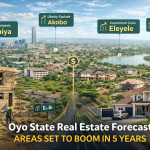
Moniya expansion corridor
Eleyele axis
Akala Express developments
Lagos-Ibadan corridor
Development is moving outward.
Early entry equals bigger appreciation.
Long-Term Outlook (2026–2030)
What can we realistically expect?
Gradual price appreciation (not explosive, but steady)
Rental demand growth
More estate developments
Increased middle-class migration from Lagos
Ibadan is positioning itself as a comfortable, less chaotic urban alternative.
Final Verdict: Is Buying Houses in Ibadan 2026 Worth It?
Yes — if you:
Choose the right location
Verify documents thoroughly
Focus on rental demand areas
Avoid emotional buying
Ibadan still offers a solid balance between affordability and growth.
It’s no longer “cheap cheap,” but it remains one of Nigeria’s most practical property investment cities.
If you’re waiting for prices to crash dramatically, you might wait long.
But if you enter strategically, returns can be impressive over 5–10 years.
Conclusion
The Nigerian real estate market is evolving. Cities like Ibadan are proving that profitability isn’t only found in Lagos skyscrapers.
Buying houses in Ibadan 2026 can still be profitable — but smart investors now rely on data, location analysis, and patience.
Real estate is not a get-rich-quick scheme. It’s a long-term wealth builder.
Wetin you think? Are you considering investing in Ibadan, or you believe Lagos still offers better returns?
Drop your thoughts in the comment section — let’s discuss!