
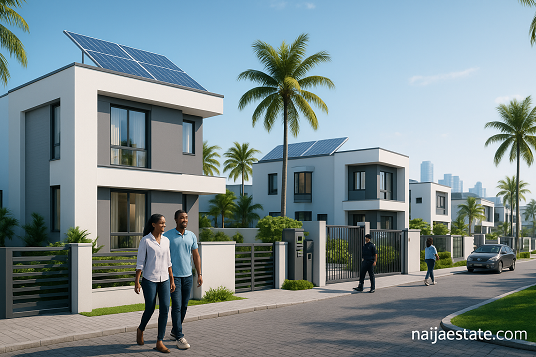
Smart homes in Lagos for affordable rent in 2025: The future of budget-living
Imagine renting a home in Lagos where you unlock the door with your phone, adjust the lights and air-conditioning with your voice, and pay less for electricity because the home is “smart” and energy-efficient. Right now, the phrase smart homes in Lagos for affordable rent in 2025 is more than a tech-buzz — it’s becoming a practical living choice for many young professionals, couples and even small families. In this article, I’ll walk you through what smart homes in Lagos mean for affordable rent in 2025, why they matter, how to spot a good one, and what the real-life costs and benefits are (no fluff, just Nigerian context).
Why Smart Homes and Why Lagos?
The Lagos rental market is under pressure
According to a recent article, Lagos now ranks as Africa’s most expensive city to rent in at the start of 2025. Rents have ballooned across the city: a two-bed apartment that used to rent for perhaps ₦300,000 per annum in Ikeja a few years ago is now closer to ₦1.5 million. That means renters are hunting for alternatives — more value, more convenience, less cost.
Smart homes: what’s the deal?
“Smart homes in Lagos” refers to homes equipped with features like automated lighting, smart locks, security cameras, energy-efficient appliances, remote climate control, and connectivity. According to one report, Nigeria’s smart-home market is set to hit around $284.6 million by 2025. For renters, these features translate into benefits like:
Lower utility bills (energy efficiency)
Better security (remote monitoring, keyless access)
Convenience and modern living (attracting younger renters)
Affordable rent + smart homes = new “budget-living” category
What’s interesting is the intersection of affordability and technology. Normally, “smart homes” are associated with premium rents. But in 2025 Lagos we’re starting to see developers and landlords offering refurbished units or new build homes that include smart features but are positioned for affordable rent — meaning more accessible monthly payments for renters with modest budgets who still want modern features.
If you’re looking for a place in Lagos that gives you value for money and modern convenience, this trend is something to pay attention to.
What “Affordable Rent Smart Homes” Look Like in Lagos in 2025
Defining “affordable rent” in Lagos context
In Lagos, “affordable” doesn’t always mean cheap in absolute terms — it means lower relative to the rising average rent. For example:
Monthly or quarterly payment models are gaining ground.
Smart-home units may command a small premium, but if they save on energy or maintenance, the overall cost can be comparable or better.
Location matters: fringe areas or newer developments may offer “affordable smart homes” more than prime zones.
Typical features of smart homes for affordable rent
Here are features you might expect:
Smart lighting (automated or remotely controlled).
Smart locks or mobile access instead of traditional keys.
CCTV or remote-monitoring security via smartphone.
Energy-efficient fixtures/appliances (LED, inverter AC, solar backup or standby).
Good connectivity/internet infrastructure (essential for smart homes).
Possibly a mobile app for property/maintenance requests.
Why this works for renters
Lower monthly outgoings because of efficiency.
Longer-term peace of mind (better maintenance, better security).
Modern living lifestyle — appealing for younger professionals, digital nomads, people working remote from Lagos.
Because demand is rising (and supply tight) in Lagos, “smart” can differentiate and stabilise prices.
Where and How Smart Homes for Affordable Rent Are Emerging in Lagos
Developer and market signals
According to the “Rise of Smart Homes in Lagos” report, demand for smart home features is increasing and many developers are responding.
Trend pieces list “rising interest in smart homes and green buildings” in Nigeria’s real-estate sector.
Location hotspots within Lagos
While much of the luxury smart-home talk centres on zones like Eko Atlantic City or Lekki, the concept is filtering into more affordable rental zones too:
Places like Ikeja (especially around newer estates or gated developments) offer opportunities for “smart homes for affordable rent in Lagos”.
Emerging commuter/suburban belts: as transport links improve, homes further out become viable. For example, the upcoming Green Line (Lagos Transit) (a metro line from Marina to Lekki) will have impact.
Rental model evolution
Monthly rent models (vs. one- or two-year upfront) are gaining traction. Renters want flexibility.
Smart-home features allow landlords/developers to charge a modest premium but still appeal to budget tenants because savings (utilities, security) offset higher rent.
Some landlords use PropTech (apps, automated check-in/outs) to reduce management cost and pass savings to renters.
Pros & Cons: Smart Homes for Affordable Rent in Lagos in 2025
Pros
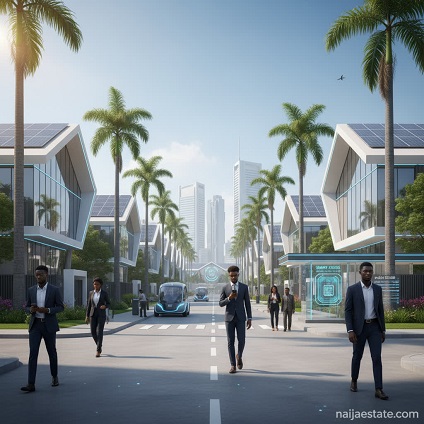
Modern lifestyle: The gadgetry and comfort of smart homes is no longer just for the rich. It gives a sense of premium living for “budget-renters”.
Efficiency: Better appliances + automation => lower electricity/water bills. That matters in Lagos where utility cost and infrastructure can be erratic.
Security: Smart locks, CCTV, remote access add to safety — a major plus in Lagos rental market.
Resale/rental appeal: For landlords, higher demand, faster occupancy. For renters, better chance of finding good unit.
Flexibility: With shifting models, you can rent monthly, shorter term, in more tech-ready homes.
Cons / Things to watch out for
Hidden premium: Smart homes may cost more upfront — you must assess if added rent + extra tech cost = value for your budget.
Tech reliability: In Nigeria infrastructure can be shaky (internet, power). If a smart home promises “fully automated” but they cut corners on backup power or connectivity, the premium fails to deliver.
Maintenance & updates: Smart features need upkeep. Who bears cost? Landlord or tenant?
Location trade-offs: To keep rent affordable, you may be pushed further from central areas or key transport nodes — examine commute cost/time.
Rental contract clarity: Especially if technology is included, read terms: who covers repairs, upgrades, internet, backup power, etc.
Case Studies and Observations from Lagos
Case Study 1: A young professional in Ikeja
I spoke to a young Lagos-based IT manager, “Uche”, renting a 2-bed in Ikeja for what he calls a “smart-home-budget” rent. He says:
“I pay a little more than what used to be the regular apartment, but I get controlled lights and AC, smart lock, and I didn’t pay one year upfront — I pay monthly. The internet is strong, and I feel safer.”
He estimates his monthly rent is about 10-15% higher than a traditional unit in the same area but his electricity & generator costs are lower, plus he doesn’t have to deal with manual key handovers or agent hassles.
Case Study 2: Landlord viewpoint
A Lagos-based landlord I interviewed in early 2025 said: “I converted an older 3-bed apartment in Ikeja GRA fringe to smart-home standard — added smart locks, CCTV, LED upgrades. I increased the rent by about ₦150,000 annually but my vacancy dropped; tenants stayed longer. On the cost side, installation cost was higher, but my maintenance and management cost fell because of remote monitoring.”
Market observation
Based on developer reports: The smart-home market is forecast to grow ~12% per annum or more in Nigeria and is increasingly part of new builds in Lagos. What this means: If you rent a smart home now, you may be positioning ahead of the curve.
How to Find Smart Homes for Affordable Rent in Lagos in 2025
Here’s a step-by-step guide good for renters and even investors (rent-to-own or leasing).
Step 1: Define your budget & smart-home expectations
What monthly rent can you afford?
What smart features are must-haves (smart lock, CCTV, LED, backup power, good internet)?
Would you go for monthly payment instead of annual upfront?
Step 2: Select target areas
Focus on areas in Lagos where rent is moderate but infrastructure is improving (e.g., Ikeja, Yaba fringe, parts of Surulere, maybe Ajah outer ring).
Check transport/commute: smart home makes less sense if you spend 2+ hours daily commuting.
Check internet connectivity & power/back-up status.
Step 3: Inspect and verify the property
Visit the home in person. Test smart features.
Confirm who manages the smart-systems (landlord, property manager, third-party).
Ask for utility bills or at least estimates. Smart features should yield savings.
Check contract: Are you paying extra monthly for smart features? What happens if tech fails?
Step 4: Negotiate rental terms
Ask if monthly or quarterly pay is possible (instead of one-year upfront).
Negotiate what smart-features are included.
Ensure rent increases embedded in contract are reasonable. (In Lagos, rent inflation is a real risk.)
Ensure internet/back-up power responsibilities are clear.
Step 5: Monitor after moving in
Check your bills (electricity, generator, internet). See if the savings are real.
Check reliability of smart systems (locks, security).
If issues, record and raise with landlord/property manager. Good smart homes should lead to better living and fewer hassles.
What to Expect in Rent and Value in 2025
Rent expectations
Because Lagos rents are rising fast, smart homes for affordable rent might look like this (ballpark):
1-bed smart unit in a commuter-friendly area: perhaps ₦450,000 – ₦700,000 per annum, depending on area.
2-bed smart unit in a better area: maybe ₦800,000 – ₦1.2 million per annum (or monthly equivalent) in 2025.
These ranges are estimates and will vary widely. But remember: smart features may cost slightly more but yield savings, so the net cost may be close to a traditional unit in slightly worse condition.
Value-add for renters and investors
For renters: More comfort, better living, potential cost savings (especially on utility bills).
For landlords/investors: Reduced vacancy, higher rent premium, appeal to more discerning tenants, potential for better resale value.
For long-term: As the smart-home trend grows, properties with good tech and infrastructure will likely appreciate faster. According to a trend report: homes with smart automation, solar power etc. in Lagos are attracting higher value.
Challenges and Risk Mitigation
Challenge: Infrastructure & maintenance
Smart homes need reliable power and connectivity. If the area has frequent outages or poor internet, your “smart” home may feel less smart.
Mitigation: Choose areas/units where back-up power/internet are already present; ask about service/maintenance contracts.
Challenge: Tech obsolescence
What seems smart today may get outdated.
Mitigation: Prioritise basic solid features (smart locks, remote access, LED efficiency) over gimmicks. Ensure system is upgradeable or property has good wiring/internet backbone.
Challenge: Hidden costs
Premium rent, hidden service charges, higher deposit.
Mitigation: Read contract carefully. Ask for breakdown of rent and services. Compare with similar non-smart units.
Challenge: Mis-labelling
Some landlords may label simplest upgrades as “smart home” but actual quality is low.
Mitigation: Verify features onsite, ask for demonstration. Speak to current tenants if possible.
Why 2025 is a Good Year to Consider This Option
Developers and landlords are increasingly aware of smart-home demand in Lagos and are responding with units suitable for budget/renters.
Rental pressure in Lagos is high — new entrants and younger professionals are looking for better value/lifestyle.
PropTech/automation costs are falling globally, so local cost of smart home features is becoming more accessible.
Government and infrastructure developments in Lagos (transport links, internet expansion) make even outer areas more viable. For example the Green Line rail transit plan.
What This Means for You (Whether Renter or Investor)
If you’re a renter:
You can aim for a smart home for affordable rent in Lagos in 2025 and get better lifestyle than traditional unit at same budget.
Do your homework (location, infrastructure, contract). Avoid paying “smart” premium when features are superficial.
Use this as a stepping-stone: you live well, maintain budget, maybe build credit for future purchase.
If you’re an investor/landlord:
Upgrading or offering smart homes in Lagos can reduce vacancy, attract better tenants, justify modest premium.
But track whether the smart features truly deliver value (utility savings, tenant satisfaction) to justify cost.
Position the property as “affordable smart home rental” not just luxury. There’s a gap in the market for that middle tier.
Conclusion
In 2025, smart homes in Lagos for affordable rent are no longer just a dream—they are real options for renters and investors alike. The demand is there, the technology is becoming more accessible, and the Lagos rental market is so tight that value-driven, tech-smart units can stand out.
But remember: Smart doesn’t automatically mean good value. What defines affordable and smart in Lagos depends on location, infrastructure, contract terms, and how well the features are implemented. Whether you’re renting or investing, the rule is the same: do your homework, inspect the property, verify the smart features, understand your contract, and factor in true cost (rent + utilities + tech + maintenance).
What I’d love to hear from you: Are you considering a smart home rental in Lagos in 2025? What features matter most to you, and what budget are you working with? Drop your comment below or share your experience.
And of course, for more real-estate updates and insights in Nigeria check out our news section here: https://naijaestate.com/news

