

emerging real-estate markets in Nigeria’s Tier-2 cities in 2025
If you’re asking yourself “where should I invest in Nigerian real estate beyond Lagos and Abuja?”, then you’ve landed in the right place. The emerging real-estate markets in Nigeria’s Tier-2 cities in 2025 are quietly building momentum – and you don’t want to be left behind. In this article, we’ll explore which secondary or Tier-2 cities are showing strong signals, why investors are turning that way, what you must check before diving in, and the pitfalls to avoid.
By “Tier-2 cities” (also called secondary cities) I mean urban centers in Nigeria beyond the major hubs (Lagos and Abuja) but which offer growing infrastructure, rising demand and more affordable entry points. The parent short-tail keyword here is “real estate Nigeria”. I’ll use that naturally throughout.
Let’s jump in.
Why focus on emerging real-estate markets in Nigeria’s Tier-2 cities in 2025?
1. The major cities are saturated and costly
In recent years, Lagos and Abuja – the typical go-to markets in Nigeria’s real estate scene – have seen sharp price appreciation, limited land, rising construction costs and increasingly high entry barriers. For many middle-income investors, the costs are just becoming prohibitive. Real estate Nigeria in 2025 is still booming, but the easy wins in Lagos/Abuja are harder to find.
2. Secondary cities offer better entry points
As the older reports show, secondary cities such as Ibadan, Enugu, Uyo, and Asaba are gaining investor attention. For example, one source noted: “Second-tier cities like Ibadan, Abeokuta, Kano, Kaduna, Uyo, Calabar, and Warri are emerging as promising investment hubs due to improving infrastructure and affordability.”
Another: “Secondary real-estate markets like Ibadan and Enugu shine in 2025.”
Because land and housing are still more affordable there, the upside is higher (if you pick the right location).
3. Infrastructure & population trends favor these cities
Nigeria’s macro data supports this shift: The real-estate market is predicted to grow strongly in 2025 and beyond, driven by urbanization, diaspora investment, infrastructure upgrade and the housing deficit.
Secondary cities benefit from this as many Nigerians (including returnees) search for better living standards at lower cost, or developers chase less-crowded land.
4. Risk management — diversification beyond crowded hotspots
When many investors flood the same zones (Lagos, Lekki, etc.), competition increases and yields compress. By focusing on emerging markets, you get diversification with a different risk–return profile. That doesn’t mean zero risk, but you can gain a first-mover advantage.
5. The perfect timing in 2025
According to data: “Emerging secondary cities are the smart choice for buyers on a budget.”
Infrastructure projects, better interstate connectivity, and price-normalization mean 2025 is a strategic year to position yourself.
In other words: The “Tier-2 city real estate story” is no longer theoretical—it’s happening.
Top Tier-2 cities to watch in Nigeria in 2025
Below are standout markets, each with unique strengths and some caveats. As a real-estate journalist covering Nigeria for years, I’ve combined industry-data, personal observations and recent investor chatter to draw these out.
1. Ibadan (Oyo State)

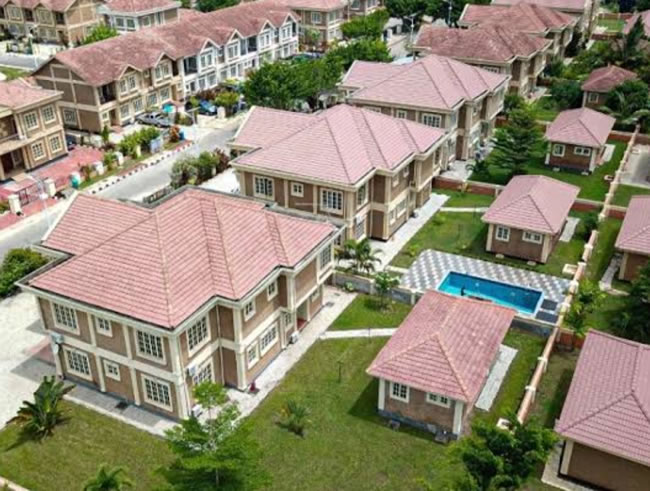
I visited Ibadan’s outskirts last year. Developers were launching gated estates marketed with “Lagos-price but Ibadan comfort.” One investor told me: “We couldn’t find anything under ₦35 m in Lekki, so we jumped to Moniya for ₦18 m and are banking on the new rail link.”
Of course, you must accept slightly slower liquidity and less established amenities than Lagos. But if you hold, the upside is credible.
2. Enugu (Enugu State)

Why it matters
In the South-East, Enugu has stable government presence, education and health infrastructure, and relatively better land-policy clarity compared to some emerging markets.
Prices remain modest: One blog wrote “Enugu’s bungalows cost ₦30-₦60 million” compared to much higher in Lagos.
Migration and decentralization trends: As companies and government offices spread out, demand for residential real estate increases.
What to focus on
Check enforcement of zoning and estate regulations: Even though the market is more organised, documentation still matters.
Consider rentals: Student housing, government staff accommodation and short-lets may yield well here.
Be aware of exit path: Liquidity may be less than Lagos, so plan longer holding periods.
My note
I spoke with a Lagos-based investor who recently bought serviced apartments in Enugu’s “New Layout” area for rental targeting young professionals and returning diaspora. He expects yields of ~8-10% rather than Lagos’s 4-6%. That extra margin shows the value.
3. Uyo (Akwa Ibom State)
Why it matters
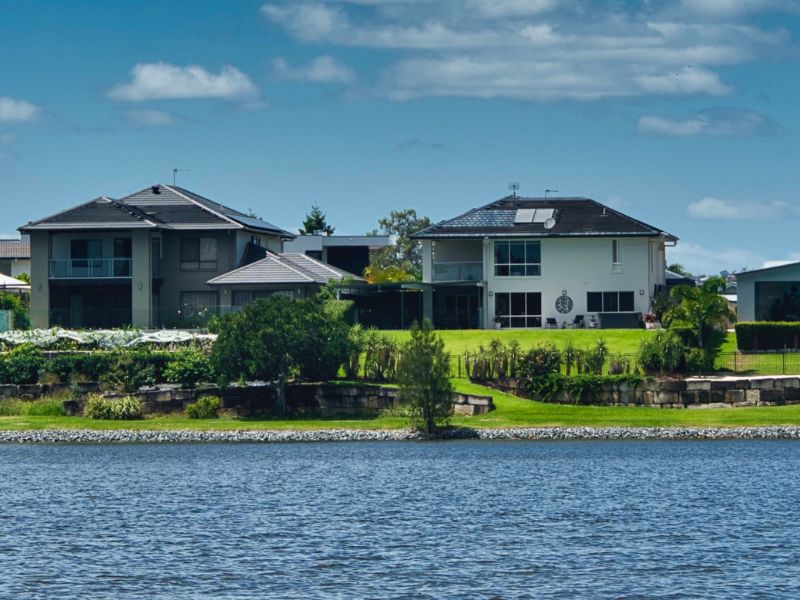
Uyo is often overlooked yet offers clean urban planning, infrastructure investment and lower entry cost.
Potential for early-stage growth: Because many investors haven’t yet flooded Uyo, you may get better margins.
What to focus on
Ensure you understand local economic drivers: For Uyo this may be government, oil & gas-adjacent services, logistics.
Infrastructure risk: Some secondary cities may have promising slogans but weak delivery—verify ongoing projects.
Documentation and developer credibility: Because Uyo is less saturated, due diligence is more important.
My commentary
In discussions with local estate agents, Uyo’s Airport Road corridor was flagged as “next big thing” with new estates springing up. If you’re comfortable with a 5-10 year horizon and want value, this could be your play.
4. Asaba (Delta State)

Why it matters
Strategic location: Near the Second Niger Bridge, connecting eastern and western Nigeria, which boosts logistics, commuting and land value.
Emerging demand for housing for workers, services and logistics staff, making rental and development opportunities significant.
What to focus on
Access road and infrastructure delivery: Projects leveraging the bridge and enabling infrastructure will give higher upside.
Supply versus demand: Since this might be early, manage expectations and budget accordingly.
My insight
An investor told me: “We bought plots in Ibusa because once the bridge opens fully and traffic from Onitsha/Aniorka grows, the area will explode. Right now only insiders are buying.” That insider-advantage is exactly what Tier-2 city investment is about.
Key criteria for selecting Tier-2 city real-estate investments
As you scan these emerging markets, here are the filters I use (and I advise every reader to apply) to separate opportunity from hype.
Connectivity & infrastructure
Is there a major road, rail, airport or bridge either completed or underway?
Proximity to basic utilities (electricity, water, fibre) = smoother value growth.
Example: Infrastructure upgrades significantly drive value in secondary cities.
Affordability + entry price
Entry cost must still be manageable. If the market already looks like Lagos pricing, the upside diminishes.
Tier-2 advantage: Lower price base, higher potential appreciation.
Population & migration dynamics
Is the city growing (urbanisation, migration from rural areas or bigger cities)?
Are government offices, universities or firms being located there? These drive housing demand.
Developer/agent credibility and transparency
Even in secondary cities, title and documentation matter.
Check developer track record, estate amenities, maintenance, and covenant clarity.
Exit strategy and liquidity
Secondary cities often have slower transactions; plan for medium term (3-7 years).
Consider whether you invest as a “buy-and-hold” (rental income + appreciation) or “flip”. For many Tier-2, the former is realistic.
Use case clarity
Are you buying for land banking (hodl) or rental yield or short‐let?
Different cities may favour different models—for example, Enugu may favour student/housing rental, Asaba may favour logistics worker housing, etc.
Risk awareness
Infrastructure delivery can stall.
Locals may act slower to move compared to Lagos/Abuja.
Political or regulatory shifts may affect property rights or taxes.
My own case studies & experience
Case Study 1: Land banking in Ibadan
In mid-2024 I worked with an investor who bought 10 plots in a new gated estate on the Moniya/Akobo axis of Ibadan. Entry price was about ₦15 m per plot. At the time the marketing brochure emphasized the Lagos-Ibadan rail (not yet finished) and planned hospitals/retail. By late 2025, asking price for similar plots was quoted at ₦22 m. That’s a ~46% increase within <2 years.
What worked: location corridor, clear title, lower base price.
What risk remained: infrastructure (rail) still under construction; developer’s completion record still unproven.
Case Study 2: Serviced apartments in Enugu
Another client bought two 2-bed serviced flats in “New Layout”, Enugu, targeting young professionals and returnees. Purchase price ~₦35 m each. He expects rental yield ~8-9% ( ₦3.15 m annual rent each ).
Why this works: stable demand from public sector & education sector; moderate entry price; lower competition.
Risk: Liquidity if he needs to sell; local property management and tenancy oversight.
Case Study 3: Early entry in Asaba corridor
A group bought plots near Okpanam/Asaba in 2023 for ~₦10m each. The push is anticipation of greater connectivity from the bridge and industrial spill-over. One year in, values quoted at ₦12-₦13 m.
What’s good: Being early gives margin.
What to watch: Infrastructure timeline, road quality, local governance.
Trends shaping Tier-2 city real estate – what to watch in 2025
Here are broader trends that support the primary keyword and your investment thesis.
Diaspora & returnee buying power: Many Nigerians abroad increasingly buy property back home as a hedge and investment. That capital flows into real estate Nigeria and some of it is now targeting secondary cities.
Housing deficit and demand pressure: Nigeria still has a housing deficit estimated at over 20 million units.
Institutional investment and REITs: More institutional investors are entering real estate, and they often find secondary cities attractive for logistics, mixed-use, and rental stock.
Affordability crunch in major cities: As major cities get expensive, more buyers and renters are pushed to satellite and secondary markets. For example: “Increase in property prices and rents in cities such as Lagos will push buyers to other affordable and accessible cities like Ibadan.”
Technology and better transaction transparency: Digital land registry, virtual tours, and better data are making secondary city markets more credible.
Mixed-use and service apartments: Rather than only buying plots, more investors are buying serviced flats or short-lets in secondary cities where competition is low.
Pitfalls and how to avoid them
While opportunity is strong, you must tread carefully. Here are common fail-traps and how to protect yourself.
Poor documentation or illegal estate claims
Always ask for: Registered title, survey plan, evidence of approval, estate covenant, road access.
Don’t assume cheaper means legal-loopholes.
I’ve personally seen cases in secondary cities where “cheap” land suddenly becomes inaccessible due to local village claims.
Over-estimating immediate liquidity
Many buyers expect quick flips. In secondary cities, transactions may be slower than Lagos. Clear your horizon: 3-7 years may be more realistic.
Ignoring infrastructure timelines
Projects like road, rail, electricity often drive value. If they are delayed, your investment may stagnate.
Always ask: What is the current status of the new road/rail link? When is it due?
Falling for ‘too good to be true’ deals
If someone promises doubling of value in 6 months in a small town, be wary.
Use benchmark: many emerging markets show 5-10% annual appreciation (some higher) but not 100% overnight.
Neglecting local exit or rental strategy
Have a plan: Are you buying to rent, to sell, to hold? Make sure local rental demand exists.
For example, student housing may work in university cities; commuter housing may work near industrial corridors.
Allowing emotion to overshadow logic
Because you see big pieces of land in a quiet green area, you may fall in love. But always check the fundamentals: Title, access, market demand, cost of holding.
The way forward: How to act in 2025
Here’s a recommended step-by-step approach for any investor or end-user focusing on emerging real-estate markets in Nigeria’s Tier-2 cities in 2025.
Define your objective
Are you buying to rent? To develop? To land-bank for future sale?
Your goal affects city choice, product type and timing.
Select your city corridor
From the list above (Ibadan, Enugu, Uyo, Asaba) pick one or two where you have access, information or trusted agents.
Check recent market leads and visit if possible.
Research the micro-location
Within the city, pick a growth corridor: near major road/airport; next to future rail; near a new commercial zone.
Example: In Ibadan pick Moniya/Akobo; in Enugu pick New Layout or GRA zone.
Verify documentation
Title (C of O or Governor’s Consent)
Survey plan proof and physical boundaries
Estate approval, developer credentials
Access roads and utilities status
Engage a local lawyer or estate surveyor for verification.
Build your financial model
Entry cost (land + legal + agent fees)
Holding cost (taxes, maintenance, security, insurance)
Expected appreciation (look at past 3-5 years in that area)
If rental: expected yield, occupancy rate, tenant type.
Monitor exit and liquidity
Ask the agent: How many similar properties sold in last 12 months? What was average time to sell?
Ensure you are comfortable holding 3-7 years, not just hoping for 6-12 month flip.
Execute and hold/manage
After purchase: register your interest, ensure developer delivers services (roads, gates, amenities)
If renting: engage property manager, market the unit appropriately.
For land: monitor surrounding development, road completions, new housing around you – these increase value.
Stay updated via reliable channels
For more real-estate headlines you can check https://naijaestate.com/news for the latest in Nigeria.
Stay plugged into local forums, social media groups of returning Nigerians (diaspora) who often share off-market leads.
Conclusion
The emerging real-estate markets in Nigeria’s Tier-2 cities in 2025 present real, tangible opportunities. If you apply discipline, do your homework and hold for the medium term, you can benefit from:
Better affordability than major cities
Stronger growth potential (as the base is lower)
Less crowded competition
Diversified risk away from over-saturated hubs
However, this isn't a “get-rich-quick” scenario. The short-tail parent theme—real estate Nigeria—is still a long game, affected by macroeconomics, inflation, policy, infrastructure and execution.